

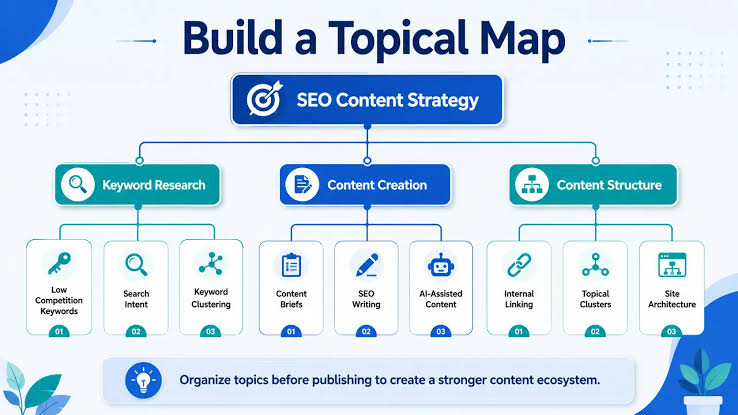
For a small website, publishing consistently is often harder than choosing a topic. Owners may understand their audience well but still struggle to turn that knowledge into a reliable plan for articles, updates, and promotion. A practical content plan solves that problem by connecting every piece of content to a clear purpose: helping readers, building trust, attracting relevant visitors, or supporting a future business goal.
Authority does not come from posting as much as possible. It grows when a site becomes useful for a particular type of reader. Whether the subject is personal finance, gaming, technology, or a local service, readers return when they can find clear explanations, current information, and advice that respects their time.
Start With a Clear Reader Problem
The best content ideas usually begin with questions rather than keywords. Ask what a reader is trying to do, what may stop them, and what information would help them make a better decision. A finance reader may want to compare savings accounts; a gaming reader may want to understand a game mechanic before spending money; a general-interest reader may simply need an unfamiliar topic explained without jargon.
Useful topics tend to fall into a few categories:
- Beginner guides that explain an unfamiliar subject
- Comparisons that show meaningful differences between options
- Checklists that help readers avoid common mistakes
- Updates that explain why a change matters
- Practical examples that turn a broad idea into an action
A topic can be popular and still be a poor fit. If it has no connection to the site’s usual audience, it may bring short-term visits without creating loyal readers. Focus first on subjects where the website can offer a useful and credible perspective.
Create Content Pillars Instead of Isolated Posts
A content pillar is a major subject that appears regularly on a website. For example, a site covering personal finance could build pillars around budgeting, credit, saving, and consumer tools. A gaming site might focus on game guides, platform news, responsible spending, and reviews. These pillars make planning easier because each new article has a natural home.
For every pillar, create a broad guide and then write supporting articles that answer narrower questions. The broad guide gives readers a starting point, while supporting posts deal with details. This structure also makes internal links more useful: readers can move from a simple explanation to a more specific solution without leaving the site.
Example of a Simple Content Cluster
A website writing about online entertainment could publish a beginner’s guide to understanding game odds, followed by posts on setting spending limits, reading game rules, and recognising misleading promotions. Each article can stand alone, but together they show that the site understands the subject beyond a single trend.
This approach is more valuable than publishing several articles that repeat the same basic facts with different titles. Repetition weakens a site’s usefulness, while a well-planned cluster gives every page a distinct job.
Use Outside Resources Carefully
Many website owners eventually need help finding writers, arranging partnerships, or identifying relevant publications for outreach. A directory or content marketplace can be useful for researching publication opportunities, but it should never replace editorial judgment. Before proposing or accepting a placement, consider whether the publication has a real audience, whether the topic is relevant, and whether the article would be useful even if it brought no immediate traffic.
Relevance matters more than broad exposure. A mention on a site read by people who care about the same topic is generally more meaningful than a placement on an unrelated website with a larger but unfocused audience. The same principle applies to guest contributions: write for the host site’s readers first, not solely for a link or a short-term metric.
Keep the contribution transparent and genuinely informative. A good external article should offer an original angle, practical examples, and an appropriate next step for readers who want to learn more. If the connection between the article and the destination is forced, readers will notice.
Build Trust Through Accuracy and Balance
Trust is especially important in finance and gaming content, where poor advice can cost readers money. Avoid promising results, implying certainty where none exists, or presenting opinion as fact. If a subject involves risk, state that risk clearly. If rules, prices, or features can change, encourage readers to check current information before acting.
Accuracy also means using precise language. Rather than saying that a strategy “guarantees” a better outcome, explain what it can and cannot do. For example, a budget can help someone control spending, but it cannot remove financial uncertainty. A game guide can explain the rules and probabilities, but it cannot turn a chance-based activity into a dependable income source.
Readers are more likely to trust a site that acknowledges limits. Balanced writing may feel less dramatic, but it remains useful long after exaggerated claims lose relevance.
Measure What Helps Readers
Traffic is important, but it is not the only sign that content is working. Look at whether readers stay long enough to engage with an article, visit another relevant page, subscribe, return later, or contact the site. These actions often show stronger interest than a brief visit from an unrelated search query.
Review content at regular intervals and ask:
- Does this article still contain accurate information?
- Does it answer the question suggested by its title?
- Could it include a clearer example, checklist, or explanation?
- Does it connect naturally to another useful page on the site?
- Is it written for readers rather than only for search engines?
Updating a useful older article can be as valuable as publishing a new one. Refresh outdated details, improve structure, and add context where readers may need it. Over time, this creates a library that is easier to navigate and more reliable for returning visitors.
Conclusion
A sustainable content plan is built on relevance, clarity, and consistency. Choose subjects that solve genuine reader problems, organise them around clear pillars, and use outside publishing opportunities selectively. Most importantly, treat every article as part of a long-term resource rather than a one-time attempt to gain attention. When a website repeatedly provides accurate and practical help, authority becomes a result of the work rather than a claim made in the headline.
