


Introduction
Over the past few years, interest in the Romanian language has grown rapidly. Whether it’s because more travelers are exploring Romania’s breathtaking landscapes, professionals are working with Eastern European markets, or language enthusiasts are discovering the charm of this unique Romance language, people around the world are becoming increasingly curious about Romanian. Its blend of Latin roots, melodic pronunciation, and rich cultural history make it both fascinating and approachable for new learners.
This guide is designed to help you understand exactly where to start and how to progress confidently. If you want to learn Romanian efficiently, you’ll find here the essential steps, tools, cultural insights, and helpful phrases that will support your journey from complete beginner to capable communicator.
Why Learn Romanian?
Romanian is one of the most intriguing Romance languages, sharing roots with Italian, French, Spanish, and Portuguese, yet preserving a distinct identity shaped by centuries of history and cultural influences. For many learners, its familiar Latin vocabulary makes it surprisingly accessible, while its unique grammar and Slavic-influenced expressions add depth and character.
There are many reasons people choose to learn Romanian. Some are drawn to opportunities in Romania’s growing tech, business, and tourism sectors. Others are motivated by family connections, travel plans, or a desire to read Romanian literature, enjoy local music, or connect more deeply with Romanian culture. Because Romania is also a member of the European Union, knowing the language can open doors for work, study, and relocation within Europe.
Whether your goal is practical communication, cultural enrichment, or expanding your linguistic skills, Romanian offers a rewarding experience that combines both familiarity and novelty.
How to Start Learning Romanian (Beginner Essentials)

Starting your Romanian learning journey can feel overwhelming, but focusing on the basics first makes it much easier and more enjoyable. Here’s how to get started effectively:
Learn the Romanian Alphabet and Pronunciation
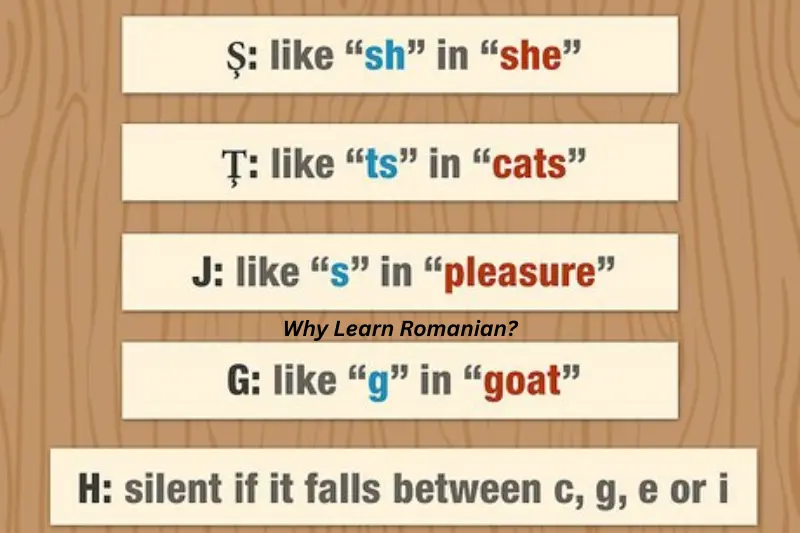
Romanian uses the Latin alphabet, just like English, but with a few additional letters: ă, â, î, ș, and ț.
- ă sounds like the “a” in sofa
- â / î are pronounced like a deep “uh” sound
- ș sounds like “sh”
- ț sounds like “ts”
Mastering these sounds early will help you read, speak, and understand Romanian more confidently.
Focus on Basic Grammar
Romanian grammar can seem tricky at first, but starting with simple structures makes it manageable:
- Nouns have genders: masculine, feminine, and neuter.
- Definite articles are usually added at the end of the noun (e.g., băiat = boy, băiatul = the boy).
- Verbs change depending on tense, mood, and person, so learning the most common verbs first is key.
Build Core Vocabulary
Start with essential words and phrases used in daily life: greetings, numbers, family terms, food, and basic questions. Flashcards or apps like Anki and Memrise are excellent for memorization.
Practice Listening and Speaking
Even as a beginner, try listening to Romanian music, podcasts, or YouTube videos. Repeating simple phrases aloud helps train your pronunciation and builds confidence.
If you consistently focus on these basics, you’ll lay a strong foundation that makes all other learning easier.
Learn Romanian Online: Best Tools & Resources
Learning Romanian has never been easier thanks to the wide range of online resources available. Whether you’re a beginner or looking to improve your skills, these tools can help you study efficiently and stay motivated.
Language Learning Apps
- Duolingo – Great for daily practice, vocabulary, and basic grammar.
- Mondly – Offers interactive lessons, chatbots, and pronunciation exercises.
- Memrise – Focuses on memorization of words and phrases through spaced repetition.
Online Courses
- Platforms like Udemy and Coursera offer structured Romanian courses for beginners and intermediate learners.
- Some courses provide certificates, which can be useful if you plan to use Romanian professionally.
YouTube Channels & Podcasts
- Channels like Learn Romanian with Nico or RomanianPod101 offer lessons on pronunciation, grammar, and daily phrases.
- Podcasts allow you to practice listening while commuting or exercising.
Social Media & Online Communities
- Join Facebook groups or Reddit communities focused on learning Romanian.
- Engage with native speakers on language exchange apps like Tandem or HelloTalk.
Tips for Effective Online Learning
- Set a consistent schedule — even 15–20 minutes daily can make a huge difference.
- Combine multiple resources: apps for vocabulary, YouTube for listening, and conversations for speaking.
- Track your progress and review regularly to avoid forgetting what you’ve learned.
By leveraging these online tools, you can accelerate your Romanian learning journey and make studying both flexible and enjoyable.
Practical Tips to Learn Romanian Faster
Learning a new language takes time, but with the right strategies, you can make faster progress and retain what you learn. Here are some practical tips to help you learn Romanian efficiently:
Immerse Yourself in the Language
- Listen to Romanian music, watch movies, or follow Romanian YouTube channels.
- Change your phone or social media settings to Romanian to reinforce daily exposure.
Practice Speaking Regularly
- Speak out loud even if you make mistakes; this builds confidence and improves pronunciation.
- Use language exchange apps like Tandem or HelloTalk to chat with native speakers.
Use Flashcards and Spaced Repetition
- Tools like Anki or Quizlet help memorize vocabulary efficiently.
- Review frequently to move words from short-term to long-term memory.
Focus on Common Phrases
Learn phrases you’ll actually use in daily life, not just isolated words.
Examples:
- Bună ziua! – Hello
- Mulțumesc! – Thank you
- Unde este…? – Where is…?
Keep a Language Journal
- Write short daily entries in Romanian, even a few sentences.
- This improves writing skills and reinforces vocabulary.
Set Realistic Goals
- Break your learning into achievable milestones: vocabulary targets, phrase mastery, or conversational fluency.
- Celebrate small victories to stay motivated.
By combining immersion, speaking practice, and smart study techniques, you can make significant progress in your Romanian learning journey while keeping the process enjoyable.
Romanian Culture & Essential Phrases
Learning a language isn’t just about words and grammar—it’s also about understanding the culture behind it. Romanian culture is rich with traditions, history, and unique expressions that make the language come alive.
Common Romanian Greetings and Expressions
Using everyday phrases correctly will help you communicate politely and naturally:
- Bună ziua! – Hello / Good day
- Bună dimineața! – Good morning
- La revedere! – Goodbye
- Mulțumesc! – Thank you
- Cu plăcere – You’re welcome
Polite Conversation Tips
- Romanians value politeness, especially when meeting someone for the first time.
- Using formal pronouns like dumneavoastră instead of tu shows respect.
Cultural Insights
- Romanian culture blends Latin, Slavic, and other Eastern European influences.
- Music, folklore, and festivals are deeply tied to language, so listening to traditional songs or stories helps learners understand idiomatic expressions.
- Humor and casual expressions often involve diminutives and playful word forms, which are common in everyday speech.
By learning key phrases and immersing yourself in Romanian culture, you’ll not only speak the language but also understand its social context—making your communication more authentic and enjoyable.
Romanian Pet Names (Termeni de Alint)
In Romanian culture, pet names or terms of endearment are commonly used among family members, couples, and close friends. They reflect affection, intimacy, and sometimes playful humor. Learning these can make your conversations sound more natural and culturally aware.
Popular Romanian Pet Names
- Iubire – My love
- Puiule – Little chick / darling
- Draga mea / Dragul meu – My dear (feminine / masculine)
- Scumpule / Scumpa – Sweetheart / precious
- Inimioară – Little heart
How to Use Romanian Pet Names
- Use them in informal, affectionate contexts.
- Among couples, friends, or parents and children, pet names are a sign of warmth and closeness.
- Avoid using them in professional or formal settings, as it can be seen as overly familiar.
Fun Cultural Note
Romanians love using diminutives, not just in pet names but also in everyday speech. For example, cățeluș (little dog) or pisicuță (little cat) shows both affection and familiarity. Understanding these small nuances helps you connect better with native speakers.
Using these pet names in conversation will make your Romanian sound more authentic and endearing.
“Christ Is Risen” in Romanian
One of the most important phrases in Romanian culture, especially around Easter, is “Christ is risen”. This expression is central to Romanian Orthodox traditions and is widely used during the Easter holiday.
The Phrase
- Christ is risen in Romanian: “Hristos a înviat!”
- Traditional response: “Adevărat a înviat!” (Truly, He is risen!)
When and How to Use It
- Used primarily during Easter celebrations, both in religious settings and among friends and family.
- It is common to exchange this greeting when visiting someone’s home or attending church services.
Cultural Significance
- Easter is a deeply significant holiday in Romania, celebrated with special foods, church services, and family gatherings.
- Knowing this phrase not only helps with language learning but also shows respect and understanding of Romanian traditions.
By learning phrases like “Hristos a înviat!”, you connect with Romanian culture on a deeper level and gain insight into the values and customs that shape daily life and festive occasions.
Sample 7-Day Romanian Learning Plan
To make learning Romanian manageable and effective, it helps to follow a structured plan. Here’s a simple 7-day routine that combines vocabulary, grammar, listening, and speaking practice:
Day 1: Basics & Alphabet
- Learn the Romanian alphabet, including special letters: ă, â, î, ș, ț
- Practice basic pronunciation
- Memorize 10–15 common greetings and phrases
Day 2: Core Vocabulary
- Focus on numbers, colors, and family terms
- Use flashcards or apps like Anki or Memrise
- Practice forming simple sentences
Day 3: Essential Grammar
- Learn noun genders and definite articles
- Introduce present tense of common verbs
- Try simple sentence construction exercises
Day 4: Listening & Speaking
- Listen to Romanian podcasts or YouTube lessons
- Repeat phrases aloud to practice pronunciation
- Engage in short conversations on language exchange apps
Day 5: Cultural Phrases & Expressions
- Learn common polite expressions
- Introduce pet names: iubire, puiule, draga mea/dragul meu
- Practice using them in context
Day 6: Easter & Religious Expressions (Optional)
- Learn special phrases like “Hristos a înviat!” and the correct response
- Understand the cultural context behind these expressions
Day 7: Review & Practice
- Review vocabulary and grammar from the past 6 days
- Write a short paragraph or dialogue in Romanian
- Reflect on progress and set goals for the next week
Following this 7-day plan consistently will help you build a strong foundation in Romanian while gradually incorporating culture, conversation, and essential phrases.
Frequently Asked Questions
How long does it take to learn Romanian?
The time it takes to learn Romanian depends on your goals, practice frequency, and previous language experience. For conversational fluency, many learners reach a comfortable level in 6–12 months with consistent daily practice.
Is Romanian hard to learn compared to other languages?
Romanian can be easier than expected for English or Romance language speakers because it shares Latin roots. Grammar can be challenging at first, but regular practice, immersion, and online resources make learning achievable.
Can I learn Romanian online for free?
Yes! There are many free resources to help you learn Romanian online, such as:
Duolingo and Memrise for vocabulary and basic grammar
YouTube channels like Learn Romanian with Nico
Podcasts and social media communities
What are some common Romanian pet names?
Romanians often use affectionate pet names to express closeness. Examples include:
iubire – my love
puiule – little chick / darling
draga mea / dragul meu – my dear
How do I say “Christ is risen” in Romanian?
During Easter, Romanians greet each other with:
“Hristos a înviat!” – Christ is risen!
Response: “Adevărat a înviat!” – Truly, He is risen!
Conclusion
Learning Romanian is an exciting journey that opens doors to a rich culture, meaningful conversations, and new opportunities. By following the steps outlined in this guide—mastering the basics, using online resources, practicing speaking, and understanding cultural phrases—you can make steady progress and enjoy the process.
If you want to learn Romanian efficiently, remember to combine vocabulary, grammar, and listening practice, while also exploring Romanian traditions like pet names (iubire, puiule) and festive expressions like “Hristos a înviat!”. With consistent practice and cultural immersion, you’ll soon find yourself confidently communicating in this beautiful language.
Start today, stay motivated, and embrace every step of your Romanian learning journey!
